TruthFinder Background Check
- 4.2
- Rating
- 1.00M
- Installs
- Free
- Price

 Analysis by App-foxy
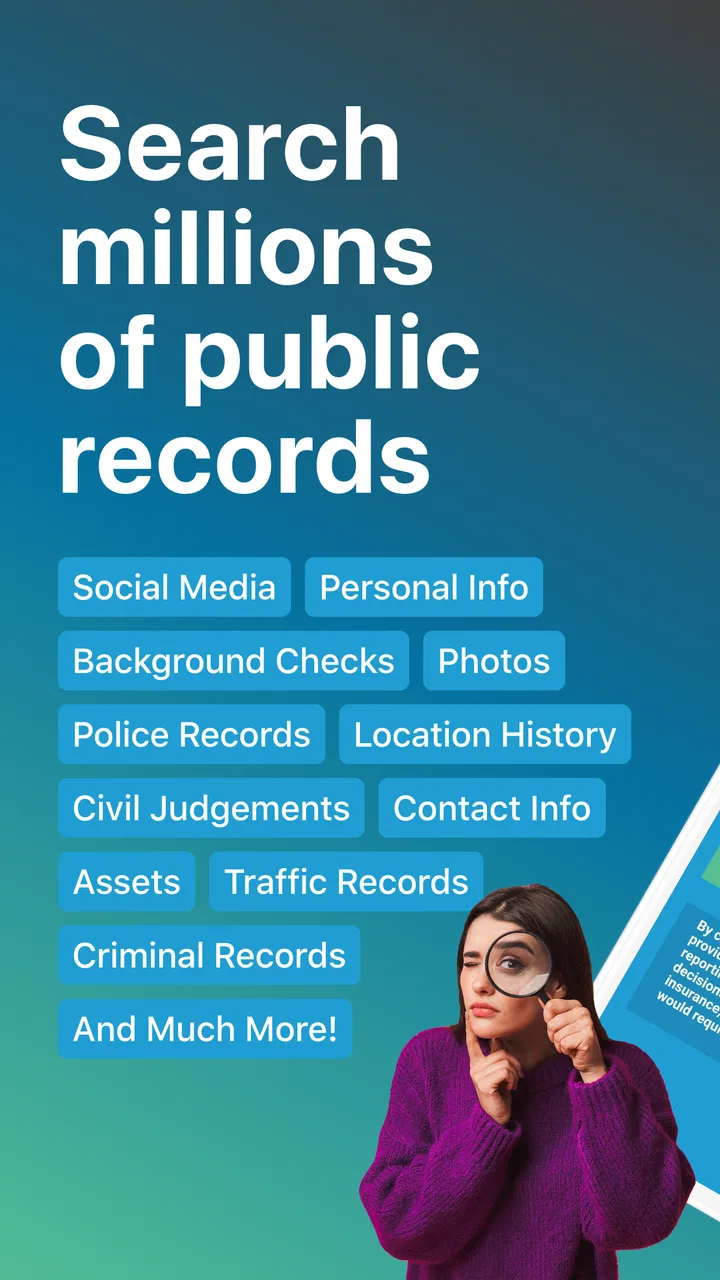
I approached TruthFinder Background Check as a practical tool rather than a casual browsing app. Its basic idea is simple: enter a name, phone number, or email and look for background information connected with that identity. That can be useful when I need context before replying to an unfamiliar contact, checking an old number, or trying to separate a real person from a suspicious online profile. It is a free tools app from Pubrec, LLC, rated for Everyone, and its large user base suggests that this kind of lookup has a clear place in everyday phone use.
What matters most to me, though, is not just whether an app can return information. It is whether I can understand the process, move through it comfortably, and judge the results without being pushed into a rushed conclusion. On that front, this app is most appealing to people who want a straightforward starting point for identity research. It is less suitable for anyone expecting a definitive answer, a substitute for official records, or a completely frictionless experience from the first search to the last result.
How the app feels to use in different situations
I find the experience changes most with the reason for searching: a quick check on an unfamiliar number calls for a different level of care than sorting out a person with a common name. In this section, I’ll look at how the same focused lookup can fit those situations, while keeping its results in perspective. That distinction leads naturally to the practical question of what it is like to use the app day to day.
You May Also Like

 Blood Strike: 2.5 Anniversary
Blood Strike’s Loadouts Turn Every Drop Into a Tactical Gamble
A close look at Blood Strike’s custom loadouts: how fast access to signature weapons reshapes its battle royale rhythm, rewards preparation, and narrows the gap between fights.

 Pandora - Music & Podcasts
Pandora’s Music Is Easy to Start, but Harder to Recover
Pandora’s strength is its low-effort path from a seed to a station. Its weak spot is how much confidence it asks you to place in connection, setup, and quiet recovery.

 8 Ball Pool
 Is Built on Rivalries, Rematches, and Routine
A close look at the rivalries, rematches, shared routines, and unanswered safety questions that turn a quick pool match into a persistent mobile community.

 Samsung Music
’s Quiet Strength Is Playing What You Already Own
Its reach comes less from spectacle than from dependable access to a personal library. That simplicity is both the app’s strongest retention engine and its ceiling.

 AccuWeather: Weather Radar
AccuWeather Review: A Quick, Clear Forecast for Everyday Decisions
For everyday plans, the best forecast is the one you can understand quickly. AccuWeather makes rain timing, radar, and local conditions easy to act on, with a few trade-offs.

 Hill Climb Racing
Why Hill Climb Racing Still Turns Crashes Into One More Run
A tiny car, a bumpy hill and one more upgrade: Hill Climb Racing keeps resurfacing because its simple chaos makes every near-miss feel personal.
More From Our News Desk



Readable navigation and a focused search workflow
The strongest part of the concept is its narrow purpose. Instead of asking me to learn a complicated research system, it centers the experience on a few familiar identifiers: a name, a phone number, or an email address. That makes the first step easy to understand, especially for someone who has never used a background-search service before. I can begin with the detail I already have rather than building a large profile manually.
This focused approach also helps when I am using the app briefly. For example, imagine receiving a message from an unknown number claiming to be connected with a local service. I can pause before responding, enter the number, and use the returned material as one piece of context. I would not treat the result as proof that the sender is trustworthy, but it can help me decide whether further verification is worthwhile.
For readability, the important habit is to slow down at each result instead of scanning only the first prominent name. Background information can be easy to misread when several people share a name or when an old contact detail remains attached to a profile. I find the app more useful when I treat the search as an organized lead, not as a single yes-or-no verdict.
The app’s public standing is also easy to place in context: it carries a 4.2 average from around 69 thousand ratings, with over a million installs. Those figures tell me that the service is established enough to attract regular attention, but they do not remove the need to inspect results carefully. A popular lookup tool can still produce information that requires confirmation elsewhere.
One practical improvement is to prepare the strongest identifier before searching. A full phone number or a complete email address is generally more useful as a starting point than a common first name. If I only have a name, I keep likely location, age range, or known associates in mind so I can compare the result sensibly rather than accepting the first matching profile.
Motor comfort and sensory demands
From an interaction perspective, a search-based app can be easier than a service that spreads its controls across many menus. The main task involves entering text and reviewing information, so it may suit people who prefer predictable, deliberate actions over rapid gestures. Someone using a larger display or system-level text adjustments may also find this kind of workflow more manageable than a visually crowded social platform.
There are still important limits to that observation. I would not assume that every screen, result card, label, or visual state works equally well for every person. The available information does not establish accessibility certification, special navigation modes, or dedicated support for screen readers, so users with specific access requirements should test the current app on their own device before depending on it for an important task.
For users with motor difficulties, the best strategy is to make the lookup a two-stage activity. First, enter the identifier slowly and check for typing mistakes. Then review the result in a calm setting rather than trying to operate the app while walking, driving, or handling another task. A wrong digit in a phone number can send the search in an entirely different direction, and correcting that mistake is more frustrating when precision is difficult.
Sensory context matters as well. A background lookup is not something I would perform effectively in a noisy queue or under bright glare if the result requires careful reading. The app may be convenient on a phone, but convenience does not mean every environment is equally suitable. If I need to compare several pieces of information, I prefer a quiet place, a stable connection, and enough time to read beyond the first screen.
Another useful distinction is between finding information and interpreting it. People with limited vision, reading fatigue, or attention difficulties may benefit from copying down the exact identifier searched and taking notes on which details appear connected. That simple record reduces the chance of mixing two similar names or forgetting which phone number produced a particular result.
Situational access: when a lookup helps and when it does not
The app makes the most sense in low-pressure situations where I want an additional clue. An unfamiliar call, a forgotten contact, a message from an old acquaintance, or an online interaction that suddenly feels inconsistent are all reasonable examples. In each case, the search can help me decide what to do next: ask the person for direct confirmation, ignore the contact, or use a more authoritative source.
It can also help families and less technical users who are uncomfortable navigating several separate websites. Entering one identifier into a mobile tool feels more approachable than assembling searches across ordinary web results. That simplicity is valuable for someone who wants a first look without learning advanced research techniques.
However, I would not use it as the sole basis for decisions involving employment, housing, lending, healthcare, legal disputes, personal safety, or accusations. A background-search result can contain outdated, incomplete, or incorrectly matched information. Those situations call for appropriate official processes and human review. The app is better understood as an early research aid than as an authority.
There is also a privacy and judgment issue that deserves attention. Searching someone’s details may be easy, but ease does not automatically make every search fair or appropriate. I try to ask whether I have a legitimate reason, whether the information could be misunderstood, and whether I would be comfortable explaining my decision if the result turned out to be wrong. That mindset is especially important when the search concerns a neighbor, date, coworker, or private individual.
For people who travel or work away from a desk, a phone-based lookup can be more immediately available than a desktop alternative. Yet I would avoid treating mobile access as a replacement for preparation. If I already know that I will need a reliable identity check, I would gather the relevant details beforehand and use the app only as one part of the process.
What the search can and cannot tell me
The store summary presents a broad promise around background checks, names, and identity details. In practice, I approach that promise with a researcher’s caution. A name search can point toward multiple people. A phone search can connect with an old owner or recycled number. An email address can be associated with a public footprint that does not prove who currently controls the account.
That is why I compare several signals before forming an opinion. Does the name fit the context? Does the phone area make sense? Is the email spelling consistent with what the person told me? Are dates or locations plausible? The app becomes more valuable when it helps me ask better questions, not when I expect it to settle every question automatically.
A non-obvious but important workflow is to search the most specific identifier first, then use the name only as a cross-check. Starting with a common name can create noise and confirmation bias. Beginning with a phone number or complete email address may narrow the field, after which the name can help me decide whether the result appears relevant. I still verify independently, but this order makes the review more disciplined.
I also avoid saving a conclusion based on a single screen. If I am checking an old contact, I write down the exact number or email, the date of the search, and the reason I searched. This is useful when several people have similar names or when I revisit the issue later. It also prevents a vague memory of the result from becoming stronger than the result itself.
Remaining barriers and practical friction
The free entry point is attractive, but the presence of in-app purchases ranging from $0.99 to $67.99 per item means I would pay close attention before continuing through any deeper part of the experience. A free download does not necessarily mean that every useful result is available without payment. I would read each screen carefully, distinguish a preview from a completed report, and avoid tapping through quickly just to see what happens.
This payment structure can be a barrier for people who need predictable costs, have limited budgets, or use assistive technology that makes small labels harder to inspect. It is also a reason not to begin a search in an emergency and assume the app will provide everything needed immediately. If the matter is urgent or high stakes, a known official route is usually the safer choice.
The app’s current version is 1.35.16.5 and it requires Android 7.0 or later. That is helpful for many Android users, but anyone using an older phone should check compatibility before planning around it. Device age can affect more than installation: text rendering, responsiveness, and the comfort of entering long identifiers may differ across phones.
Another barrier is cognitive rather than technical. Search results can feel authoritative because they are presented in a structured format. That presentation may encourage overconfidence, especially when a person is already worried about a stranger or suspicious message. I consider the app safer to use when I deliberately label each finding as “possible,” “relevant,” or “needs confirmation” instead of treating every displayed association as established fact.
Users who need fully documented records, formal identity verification, or a guaranteed audit trail should choose a specialized service designed for that purpose. Likewise, people who only want to identify an unknown caller may prefer a caller-identification tool focused on live call screening, while people researching public information may find ordinary search engines more transparent for individual sources. TruthFinder sits between those options: broader than a simple caller lookup, but not a replacement for official verification.
Who will benefit most from it
I see the best fit in cautious everyday users who occasionally need context around a name, phone number, or email. It is particularly approachable for someone who wants one mobile starting point instead of piecing together several searches. The free installation lowers the barrier to trying the basic workflow, while the Everyone age rating makes the product broadly positioned for general audiences.
It may also help a person who is rebuilding an old contact list. If I find a number without a clear name, a lookup can offer a lead that I then confirm through a direct message or another reliable source. The important word is “lead.” I would not merge a suggested identity into my contacts until the person confirms it or another trustworthy record supports it.
I would recommend skipping it if you need instant certainty, guaranteed accuracy, or a formal report for a serious decision. I would also hesitate if reading dense results is difficult on your phone and you cannot comfortably adjust the display or review the information on another device. In those cases, a service with clearer documentation, human assistance, or a desktop-oriented workflow may be a better match.
My inclusive verdict after using the workflow
TruthFinder Background Check is most useful when I treat it as a calm, accessible starting point for identity research rather than a final judge of another person. Its name, phone, and email searches address real everyday situations, and the focused design makes the first step less intimidating than a sprawling research platform. Pubrec, LLC has positioned it in the tools category where that practical, on-demand role makes sense.
Its inclusive value comes from convenience and a relatively direct task: enter an identifier, review what appears, and decide whether more checking is needed. That can suit users who prefer a phone-based process and people who do not want to navigate several unrelated sources. Still, access is not only about opening the app. Clear reading, careful typing, cost awareness, and the ability to interpret uncertain matches all affect whether the experience works for a particular person.
My final advice is to use the most specific identifier available, check every match against the situation, and pause before paying for expanded information. Never let a single result determine a high-stakes decision, and do not confuse a convenient search with official confirmation. Used with those boundaries, this free tools app can be a practical first check. Used without them, its structured results and optional purchases may create more confidence than the evidence deserves.
FAQs for TruthFinder Background Check
01What is TruthFinder Background Check used for?
TruthFinder is a people-search and background-information service designed to help users find publicly available details associated with a person. Depending on the available records, a report may include contact information, possible relatives, previous addresses, social profiles, and other public data. Results can vary considerably by location, name accuracy, and the amount of information available in public databases.
02Does TruthFinder provide a complete or official background check?
No. TruthFinder should not be treated as a complete, guaranteed, or officially verified background check. Its reports are compiled from public and commercially available sources, which may contain outdated, incomplete, duplicated, or incorrect information. The service is generally intended for personal research and should not be used as the sole basis for employment, housing, credit, insurance, or other decisions regulated by applicable background-check laws.
03Is TruthFinder free to use, or does it require a subscription?
TruthFinder may allow users to begin a search without charge, but viewing detailed information typically requires payment or a membership plan. Before completing registration, carefully review the current pricing, trial terms, renewal schedule, and cancellation policy. Subscription conditions can change, and users should confirm whether a trial automatically converts into a recurring plan before entering payment details.
04Is TruthFinder available as a mobile app for Android and iOS?
TruthFinder’s availability can vary depending on the country, operating system, and current product offering. Users should check the official Google Play Store or Apple App Store, as well as TruthFinder’s official website, before downloading anything. Avoid unofficial APK files or applications using similar branding, because they may not be affiliated with the service and could create privacy or security risks.
05How does TruthFinder handle privacy and personal information?
Because TruthFinder searches and presents information connected with people, privacy deserves careful attention. Review the service’s privacy policy to understand how search activity, account details, payment information, and report data may be processed or shared. If your own information appears in a report, look for the official opt-out or suppression procedure, although removing data from one service may not remove it from the original public sources.
Pros
- Searches can reveal useful public-record details in one place.
- Reports may include aliases
- relatives
- addresses
- and contact information.
- The interface is generally straightforward for first-time users.
- Can help verify information before meeting someone new.
- Mobile access makes searches convenient while away from a computer.
Cons
- Full reports typically require a paid subscription or additional payment.
- Information may be outdated
- incomplete
- or incorrectly matched.
- Results can vary significantly depending on the person and location.
- The service is intended for personal use
- not employment screening decisions.
- Canceling subscriptions may require careful attention to billing settings.

TruthFinder Background Check
Gallery